
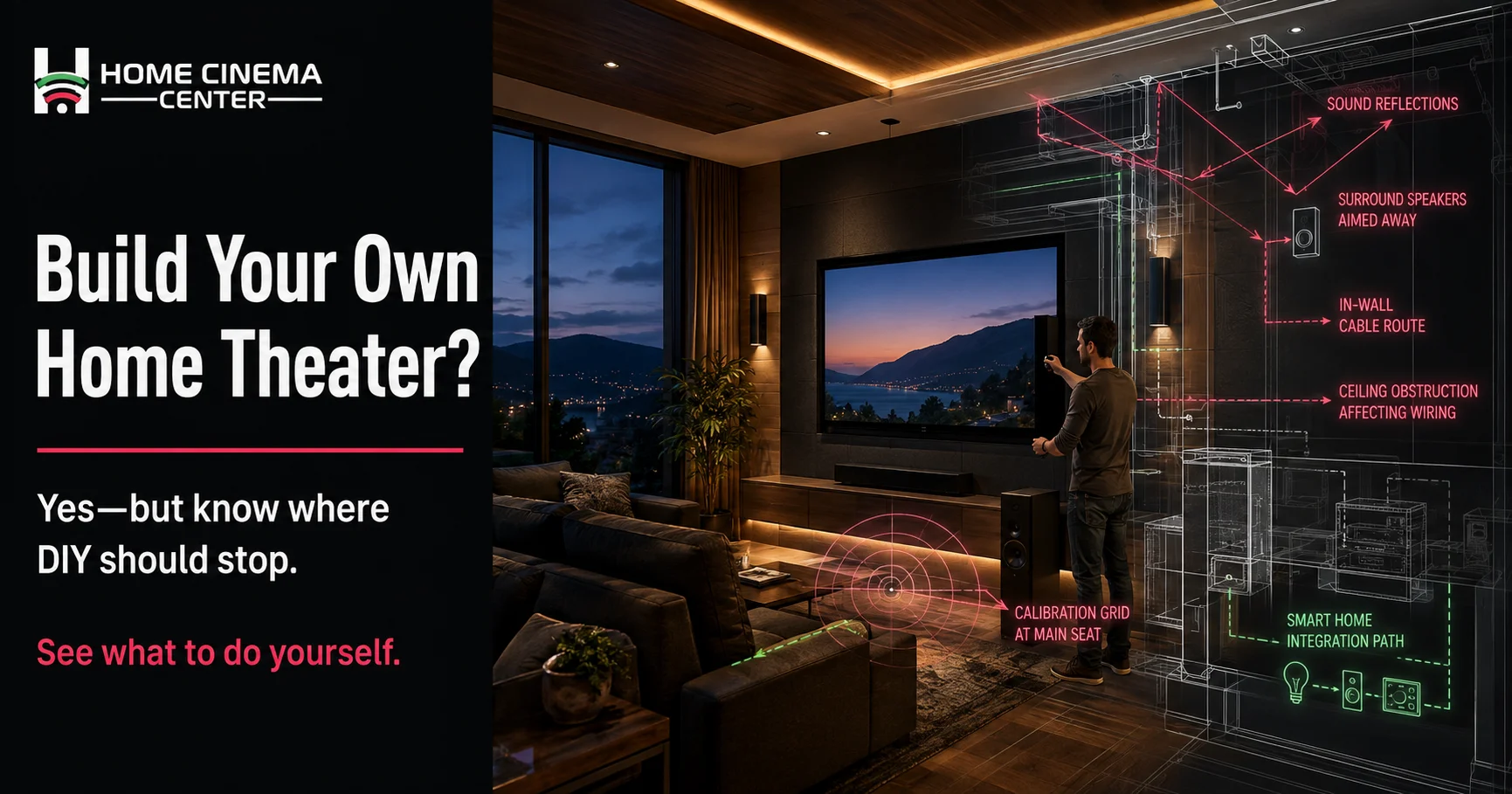
Yes, you can absolutely build a home theater in your own house. A spare room, a bonus room over the garage, a section of the basement, even a large living room can become a real home theater with the right planning. The more interesting question isn’t can you, it’s how far can you take it yourself before it makes sense to bring in help and that answer depends on how far “home theater” actually means to you.
For some people, that means a nice TV, a sound bar, and comfortable seating. For others, it means a dedicated, light-controlled room with surround sound tuned to the exact dimensions of the space. Both are real home theaters. They just require very different levels of DIY skill.
Key Takeaways
- A basic DIY home theater (TV, sound bar, comfortable seating) is genuinely achievable for most homeowners.
- Acoustics, speaker placement, and in wall wiring are where DIY projects most often fall short of their potential.
- A hybrid approach DIY for simple tasks, professional help for wiring and acoustics is one of the most practical paths.
- Room shape and size matter more than most people expect when planning a home theater layout.
- Getting a professional opinion early doesn’t mean giving up the DIY parts you actually want to do.
What “Building Your Own Home Theater” Actually Involves
A home theater isn’t one project it’s several smaller ones stacked together:
- Choosing and setting up a display (TV or projector and screen)
- Selecting and placing speakers for surround sound
- Running or concealing cables
- Treating the room acoustically so sound doesn’t echo or bounce unpredictably
- Arranging seating for good sight lines
- Controlling light in the room

Some of these are very DIY-friendly. Others involve real technical trade-offs that are easy to get wrong on a first attempt.
What You Can Realistically DIY
Mounting a TV or setting up a projector Wall-mounting a TV or setting up a freestanding projector and screen is well within reach for most homeowners with basic tools and a weekend.
Choosing and arranging seating This is largely a design decision sofa vs. recliners, single row vs. multiple rows that doesn’t require technical AV expertise, just some measuring and planning.
A basic sound bar or entry-level speaker setup Plug-and-play sound bars and simpler wireless speaker systems are designed for DIY installation and can meaningfully improve sound over TV speakers alone.
Basic lighting adjustments Blackout curtains, simple dimmer switches, or smart bulbs are accessible upgrades that make a real difference in picture quality without any specialized skill.

Where DIY Home Theaters Typically Run into Trouble
Acoustics
This is, by a wide margin, the area where DIY setups most often fall short. Getting speaker placement and room acoustics right is a genuine skill one home theater is often ruined not by the equipment, but by dialogue that sounds muffled or action scenes that turn into an echoing mess because the room’s acoustics were never addressed.
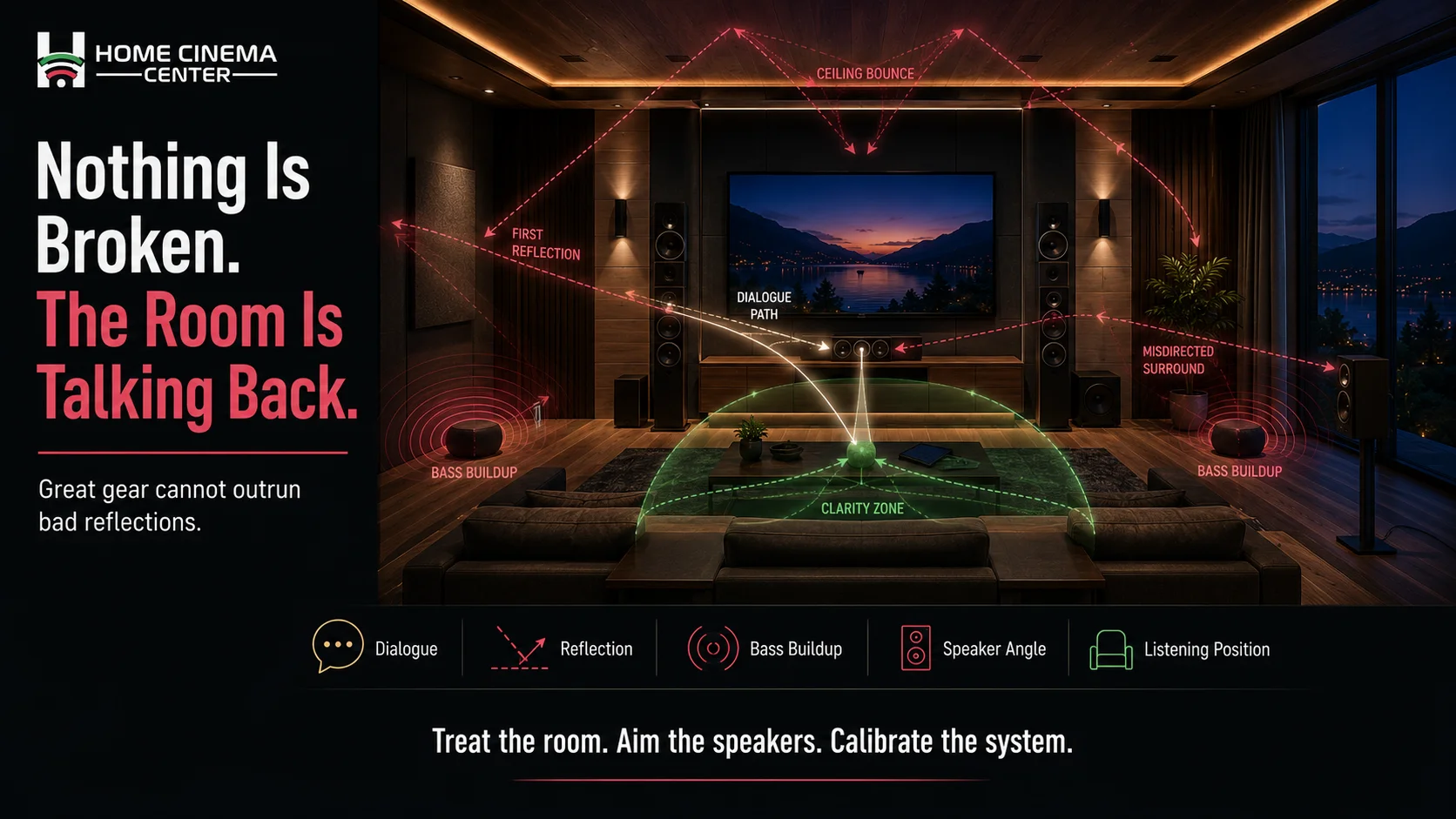
Achieving that “movie theater” sound quality involves careful speaker placement and positioning viewers relative to speaker angles the kind of trial-and-error process that can consume many hours and often results in wasted money on returned or re-positioned equipment before it’s dialed in.
In Wall and In Ceiling Wiring
Running cables through walls and ceilings to keep a room looking clean requires real electrical know-how, and mistakes here can affect more than just your home theater they can affect your home’s electrical safety.
Calibration
Even well-placed, well wired equipment needs to be calibrated matching speaker levels, screen settings, and surround processing to the specific room. This step is invisible when done well and very noticeable when skipped.
Integration with Smart Home or Whole-House Systems
If you want your home theater to tie into whole-house audio, lighting control, or automated shades, the complexity increases significantly, since these systems need to talk to each other reliably.
DIY vs. Professional: A Practical Comparison
| Task | DIY-Friendly? | Why |
| TV or projector setup | Yes | Straightforward with basic tools |
| Seating and room layout | Yes | Design decision, not technical |
| Soundbar / basic speakers | Yes | Designed for easy setup |
| Full surround sound placement | Difficult | Requires acoustic knowledge |
| In wall/in ceiling wiring | Not recommended | Electrical and safety complexity |
| Acoustic treatment | Difficult | Room-specific expertise needed |
| Whole-home automation integration | Not recommended | Requires system-level expertise |
Do This, Not That
- Do start with the parts of the project you can confidently DIY mounting, seating, basic lighting.
- Don’t assume that finishing those parts means the acoustics will “just work out.”
- Do research your room’s dimensions and shape before buying speakers.
- Don’t buy a surround sound package designed for a generic room without checking whether it fits yours.
- Do consider a hybrid approach: DIY the visible, simple parts and bring in help for wiring and acoustic treatment.
- Don’t run in-wall cabling yourself if you’re not confident about electrical safety.
- Do get a professional opinion on acoustics even if you plan to DIY the rest.
- Don’t wait until the room “just doesn’t sound right” to ask it’s cheaper to plan for it upfront.
Home Theater Room Ideas to Start With
If you’re still deciding what kind of space you want, a few common starting points:
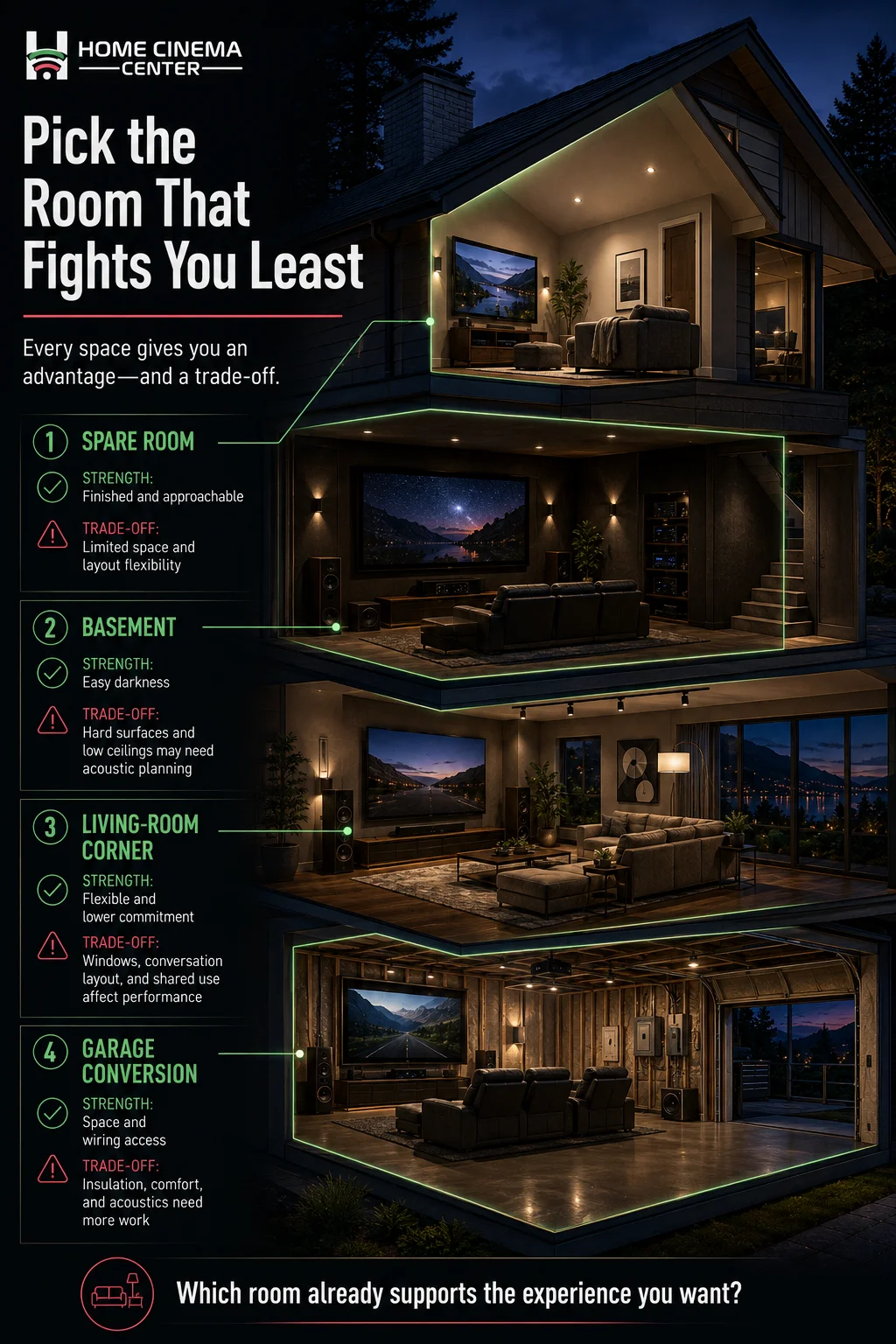
- A converted bonus room or spare bedroom often the easiest starting point since walls and flooring are already in place.
- A basement media room offers natural light control but usually needs more acoustic planning due to hard surfaces and low ceilings.
- A living room “theater corner” a more flexible, less permanent option using a large TV, soundbar, and comfortable seating without dedicating an entire room.
- A garage conversion offers space and often easier access for wiring, but typically needs more insulation and acoustic work than an already-finished room.
A Familiar Scenario
Picture someone tackling a spare room theater project over a few weekends. The TV goes up cleanly, the seating looks great, and the room finally feels like “the theater room.” But once the lights go down and the movie starts, something’s off dialogue sounds thin, and loud scenes feel chaotic rather than immersive. Nothing about the equipment is broken. The room itself its shape, its hard floors, the way sound bounces off the walls was never addressed. This is one of the most common DIY home theater experiences, and it’s also one of the easiest things to get right with the correct guidance from the start.
When DIY Meets Professional Help
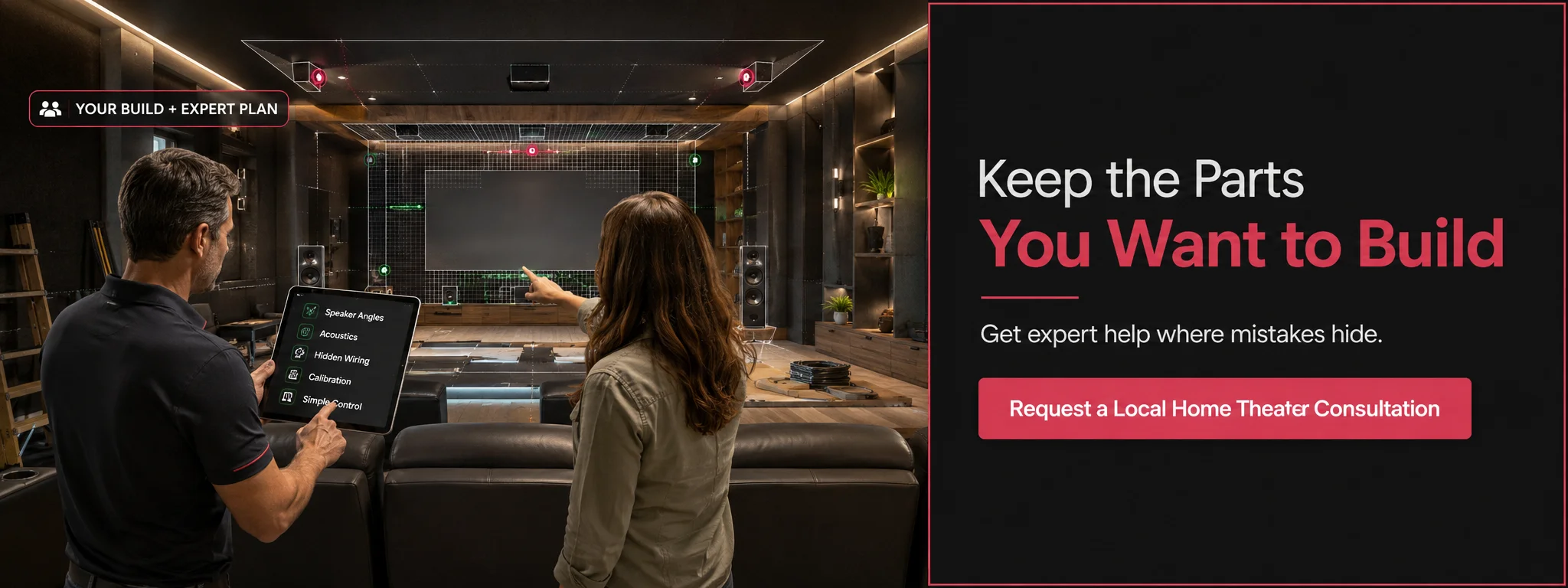
None of this means DIY is the wrong choice for plenty of homeowners, doing the visible, hands-on parts of a home theater project is exactly the experience they want. The practical path for most people is a hybrid: handle what you enjoy and are comfortable with, and bring in an expert for the parts acoustics, wiring, calibration was getting it wrong is expensive to fix later.
If you’ve started a home theater project yourself and want a second opinion on the acoustics, wiring, or overall layout or you’d rather have the whole thing designed and installed professionally from the start Home Cinema Marin works with homeowners throughout Marin County to design and install home theaters that actually perform the way they look.
Frequently Asked Questions
Can you build a home theater in your own house?
Yes. A spare room, bonus room, basement, or even a section of a living room can become a home theater. The scope of what’s realistic to DIY depends on how far you want to take it basic setups are very achievable, while acoustics and wiring are harder to get right without experience.
What parts of a DIY home theater are easiest to do yourself?
Mounting a TV or setting up a projector, arranging seating, installing a basic sound bar, and making simple lighting adjustments are all realistic DIY tasks for most homeowners.
What’s the hardest part of building a home theater yourself?
Acoustics is consistently the most difficult part to get right without experience poor speaker placement and untreated room acoustics are the most common reasons a DIY home theater doesn’t sound the way homeowners expect.
Is it safe to run speaker or HDMI wiring through walls myself?
It can be done, but in-wall and in-ceiling wiring carries really electrical and safety considerations, and mistakes can be costly to fix. Many homeowners choose to DIY the visible parts of the project and bring in a professional for wiring.
What are some good home theater room ideas for a first project?
A converted spare bedroom or bonus room is often the easiest starting point, while basements offer good light control but usually need more acoustic planning. A living room “theater corner” is a flexible, lower-commitment option.
Should I get a professional opinion even if I want to DIY most of my home theater?
Yes. A short consultation on acoustics and layout even if you plan to handle the equipment and setup yourself can prevent the most common and expensive DIY mistakes.
Does Home Cinema Marin help with home theater projects that are already partly DIY?
Yes. Home Cinema Marin works with Marin County homeowners at any stage of a home theater project, whether that means starting from scratch or refining acoustics, wiring, or layout on a space that’s already underway.


